
Everything You Need to Know About Breathable Mesh Fabric
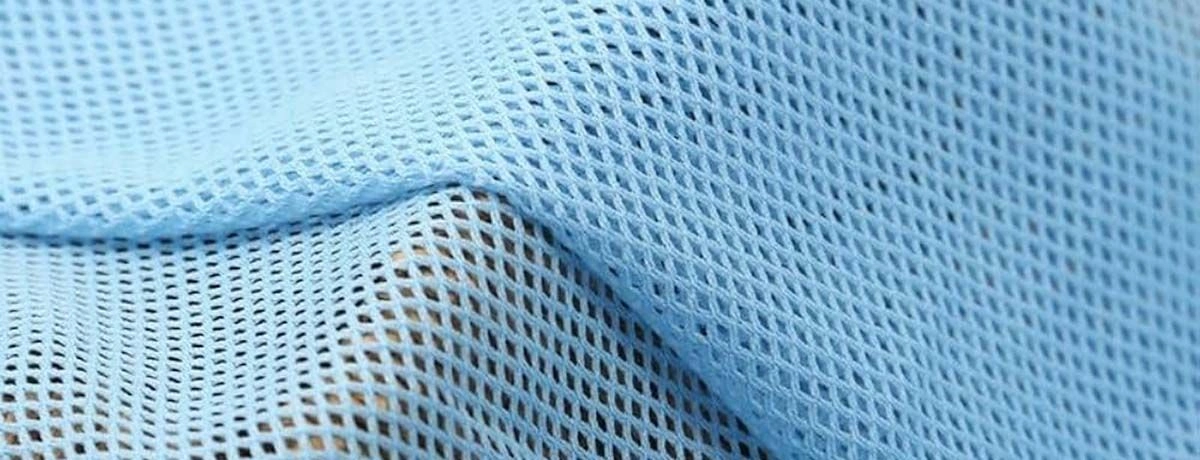
Breathable mesh fabric is a knit or woven textile built around open holes rather than a closed surface. The open structure is what does the work: air passes through the fabric instead of around it, so heat and sweat escape faster than with any solid cloth of the same fiber.
That makes mesh a practical choice when garment manufacturers, bag factories, fabric importers, sportswear designers, outdoor gear producers, footwear makers, medical garment suppliers, and other fashion industry professionals need better ventilation, moisture management, lower weight, or added comfort in active and technical products.
Most commercial mesh runs on polyester or nylon, from roughly 40 GSM insect netting up to 600 GSM 3D spacer mesh, often engineered alongside polyester interlock knit sportswear fabrics that share similar performance and durability requirements.
Key Takeaways
- Mesh breathability comes from the open hole structure, not the fiber. Fiber choice (polyester vs nylon) drives cost, hand-feel, and moisture behavior.
- The four commercial families are standard/athletic mesh, power mesh, spacer (3D) mesh, and netting, each with distinct GSM and stretch profiles.
- Power mesh blends 15–25% spandex for compression; spacer mesh adds 2–10 mm of cushioning for bags, footwear, and mattresses.
- To quote accurately, specify fiber, GSM, hole size, stretch, width, finish, not just “breathable mesh”.
What Makes Mesh Fabric Breathable?
Breathability in mesh is structural. Where a plain-woven shirt fabric relies on tiny gaps between yarns, mesh uses an open weave or open-knit structure with deliberate holes and open spaces, so a far larger share of the fabric face is open air. More open area means faster heat and vapor exchange, which is why mesh panels are the default venting solution in activewear, workwear linings, and bag backs.
Fiber still matters for what happens to sweat once it hits the yarn. Polyester absorbs very little moisture and dries fast, which is why it dominates athletic mesh. Nylon is stronger per weight and slightly softer, and it holds a bit more moisture. Mesh made from synthetic materials can be more durable and flexible than other materials, depending on the fibers and design, so synthetic mesh is the standard for anything sold at volume.
What Are the Main Types of Breathable Mesh?
For a buyer, "mesh" covers many types, various types, and different types of mesh that are produced in different ways to create different structures, with different price points and machinery behind them. The practical differences come down to GSM, stretch, structure, and characteristics:
| Mesh type | Typical fiber | Typical weight | Stretch | Best-fit application |
|---|---|---|---|---|
| Standard / athletic mesh | 100% polyester | 80–160 GSM | Low–moderate | Jerseys, shorts linings, sportswear panels |
| Power mesh | Nylon or polyester + 15–25% spandex | 140–200 GSM | High, 4-way | Shapewear, sports bras, compression panels |
| Spacer (3D air) mesh | Polyester, 2–10 mm thick | 250–600 GSM | Low | Bag backs, footwear, mattresses, seating |
| Netting / tulle mesh | Nylon or polyester | 40–80 GSM | Low | Insect nets, laundry bags, garment overlays |
-
Standard athletic mesh is the volume product: hexagonal or square holes, easy to dye, and cheap to run. A polyester hex mesh in the 100-150 GSM band covers most sportswear and bag-lining programs, especially for making sportswear where durability and flexibility depend on the fiber and design.
-
Power mesh trades some airflow for recovery. The spandex content is the spec to watch: below 15% it behaves like stretch lining, above 20% it delivers real compression for shapewear and sports bras, with elasticity that helps garments hold their shape in items like leggings and other clothing.
-
Spacer mesh is two mesh faces knitted apart by a monofilament pile. A 100% polyester 3D air mesh gives cushioning plus airflow in one material, replacing foam laminates that trap heat.
-
Netting is the lightest and cheapest family, sold on hole size (mesh count) more than GSM; hole pattern or style affects how transparent it looks and what uses it fits, and tulle is also common in dance garments and costumes.
Where Is Breathable Mesh Used?
Mesh earns its place wherever heat, sweat, or weight is the design problem, across clothing and accessories. The same base fabric often serves several of these categories and industrial applications, which is worth knowing when you consolidate orders:
-
Sportswear and team apparel. Jerseys, running shirts, gym shorts, and ventilation panels. Moisture-wicking polyester mesh in 100-160 GSM is the workhorse; power mesh handles sports bras and compression zones, and many brands mix it with polyester spandex stretch woven fabric in areas that need structure plus mobility. Lightweight mesh helps the body stay cool and is suitable for clothes built for movement.
-
Bags and outdoor gear. Backpack back panels and shoulder straps use spacer mesh for padded airflow; pocket linings use light hex mesh to cut weight and let gear dry, often combined with waterproof Oxford fabric for shells and reinforcement zones. Additionally, the same constructions show up in practical items like tent screens.
-
Footwear. Shoe uppers and linings use spacer and sandwich mesh for structure without heat build-up.
-
Medical and workwear. Compression garments rely on power mesh; hospital bedding and brace linings use spacer mesh where skin needs continuous airflow, while nonwoven substrates such as 60gsm PP nonwoven fabric often appear in disposable medical and protective products. It is increasingly used in orthopedic support products.
-
Fashion and decor. Tulle overlays, sheer panels, and sportswear-inspired streetwear keep light mesh in regular apparel rotation in the fashion industry. Fine mesh can look transparent, and tulle or polyester stiff net fabric is often used in dance garments, costumes, and millinery; for some uses, lining helps with privacy or snag protection. Mesh also appears in home décor, automotive interiors, and furniture where comfort and ventilation matter, sometimes layered with lighter chiffon fashion fabrics for visual effect in garments and soft furnishings.
In our experience supplying garment makers and bag factories, the highest-volume repeat orders sit in athletic mesh and spacer mesh, because both feed year-round programs rather than seasonal fashion.
Sourcing Breathable Mesh from MH (Supplier Overview)
Founded in 1999, MH (Ningbo MH) is a China-based garment accessories and tailoring materials supplier that serves B2B buyers across more than 150 countries. Their extensive catalog — which includes breathable mesh — is designed to meet the demands of wholesale and large-scale manufacturing operations.
For garment manufacturers, bag factories, and fabric importers, that scale translates into three practical advantages: consistent lots (mesh knitted and dyed to repeatable GSM and shade across reorders), one-stop materials (mesh plus matching thread, zippers, elastic, and lace from a single source, one shipment instead of five) backed by polyester sewing thread manufacturing capabilities, and proven export logistics to 150+ markets.
Send your spec, fiber, GSM, hole size, stretch, width, finish, MOQ, and target lead time, and MH's team will quote against it like-for-like.
Browse the mesh fabric range →

Frequently Asked Questions
Is mesh fabric always breathable? Effectively yes, breathability is the point of the open structure, but the degree varies widely. A 40 GSM tulle passes far more air than a 600 GSM spacer mesh, and coatings such as PU backing reduce airflow. If ventilation is critical, specify open-area or air-permeability requirements rather than relying on the word "mesh." Wash at a low temperature when the fabric includes coatings, spandex, or very fine constructions.
Which is better for sportswear: polyester or nylon mesh? Polyester mesh is the default for sportswear. It absorbs almost no moisture, dries faster, holds sublimation printing well, and costs less. Nylon mesh is stronger and softer, so it wins where abrasion or hand-feel matters, such as luggage and lingerie. Many power meshes blend nylon with spandex for recovery. Both are petroleum-based synthetic materials, though recycled options are also produced. For sustainability, neither biodegrades easily, and nylon has a heavier emissions footprint because its production can release nitrous oxide.
What GSM should I choose for athletic mesh? Most athletic apparel mesh falls between 80 and 160 GSM. Lighter weights (80-110 GSM) suit linings and vent panels; 120-160 GSM handles full jersey bodies with better opacity and durability. Confirm GSM with a ±5% tolerance in writing, since open-structure fabrics vary more than solid cloth. In some markets, the same material is also sold by the yard with width listed separately.
What is power mesh used for? Power mesh is a fine, 4-way-stretch mesh blended with 15-25% spandex, used where compression and recovery matter: shapewear, sports bras, waistband linings, and medical compression garments. Nylon power mesh also appears in beekeeping veils because its fine structure is protective. The spandex percentage and stretch direction are the two specs that determine whether it performs as intended.
What information does a mesh supplier need for a quote? State fiber (and spandex %), weight in GSM, hole size or gauge, stretch type, usable width, finish requirements, color standard, MOQ, and target lead time. Providing all eight up front lets a supplier like MH quote accurately and hold consistent lots across reorders.
