
The Best Uses and Benefits of Polyester Cotton Blend Fabric

Polyester cotton blend fabric (poly-cotton, TC or CVC) is a woven or knitted cloth spun from a mix of polyester and cotton fibers, most often in 65/35, 80/20, 50/50 or 60/40 proportions. Polyester brings strength, shape retention and quick drying; cotton brings a softer hand and moisture absorption.
Key Takeaways
- TC fabric is polyester-majority (e.g. 65/35, 80/20); CVC (“chief value cotton”) is cotton-majority, typically 60/40.
- More polyester means lower shrinkage, better crease and abrasion resistance, and lower cost; more cotton means a softer, more absorbent hand.
- Cotton's standard moisture regain is 8.5% vs 0.4% for polyester (ASTM D1909), which is why high-poly blends feel less breathable.
- Blends pill more than 100% cotton, and each fiber needs its own dye class, so shade consistency across both fibers is a real quality marker.
- Workwear twills commonly run 195–240 g/m²; poplins and pocketing are much lighter.
What Is Polyester Cotton Blend Fabric?
Polyester cotton blend fabric is a woven or knitted cloth made by spinning polyester and cotton fibers together in the same yarn, usually in ratios such as 65/35, 80/20, 60/40, or 55/45, so it combines polyester's strength and quick drying with cotton's softer hand and better moisture absorption. Two trade names describe which fiber leads.
For garment manufacturers, uniform makers, fabric wholesalers, workwear and schoolwear brands, hospitality linen producers, and retail apparel makers, the appeal is practical: the blend exists to fix each fiber's weak spot and deliver a better balance of durability, comfort, cost, and care performance. Pure cotton wrinkles, shrinks and wears through faster under industrial laundering. Pure polyester is tough but feels slick and holds heat. Blending gives a cloth that washes and wears like a synthetic while keeping part of cotton's hand feel.
The same logic runs across MH's TC range, from 65/35 twill for uniforms to 90/10 poplin for shirting and linings.
How Does the Blend Ratio and Wrinkle Resistance Change the Fabric?
The ratio is the single biggest lever on performance. Every 10-15 points shifted toward polyester trades a little softness and absorbency for more dimensional stability, crease recovery and abrasion life. Here's how the common ratios compare and where each one typically ends up:
| Ratio (Poly/Cotton) | Type | Hand feel | Shrinkage & wrinkling | Typical uses |
|---|---|---|---|---|
| 90/10 | TC | Smooth, crisp | Very low | Poplin shirting, linings, printed poplin |
| 80/20 | TC | Firm | Very low | Workwear drill, pocketing, budget uniforms |
| 65/35 | TC | Balanced | Low | Uniforms, chef wear, workwear twill, ripstop |
| 50/50 | TC/CVC boundary | Soft | Moderate | T-shirts, sweatshirts, bedding, everyday wear |
| 60/40 (cotton-rich) | CVC | Soft, cotton-like | Moderate–higher | Retail knitwear, polos, casual shirts |
A useful rule: 65/35 is the default when a garment has to survive frequent industrial washing and still be worn all day. 50/50 is common for casual wear and everyday apparel because it balances comfort and easy care, though it is typically slightly more expensive than 100% cotton. 80/20 and 90/10 push cost and stability further for items where skin contact matters less, such as pocketing and linings. CVC blends move the other way, toward retail comfort.
Poly-Cotton vs 100% Cotton vs 100% Polyester
The clearest way to see what a blend does is to put it between its two parents and against other fabrics. Standard moisture regain, the water a fiber holds at 65% relative humidity, is 8.5% for cotton and 0.4% for polyester. A 65/35 blend lands in between, which is why it feels drier than cotton but less clammy than pure polyester.
| Property | 100% Cotton | 65/35 Poly-Cotton | 100% Polyester |
|---|---|---|---|
| Moisture regain | 8.5% | Between the two (cotton-weighted share) | 0.4% |
| Hand feel | Soft, matte | Soft-firm | Smooth, synthetic |
| Shrinkage | Highest | Low | Very low |
| Wrinkle resistance | Poor | Good | Excellent |
| Abrasion / tear strength | Moderate | High | Very high |
| Pilling | Low | Moderate (poly fibers anchor pills) | Moderate–high |
| Heat tolerance (ironing) | High | Medium | Low–medium |
| Dye classes | Reactive / vat | Disperse + reactive (two-step) | Disperse |
So where does pure cotton still win? Heat tolerance, absorbency and a fully natural label. Where does polyester win? Cost, drying speed, shape, and a more durable profile than cotton, while cotton-polyester blends are often more budget-friendly than 100% cotton. The blend wins whenever a product needs a bit of both, which is why polyester blends are common in uniform, workwear and home-textile programs and often keep color better after washing than pure cotton. For a deeper head-to-head, see polycotton vs cotton.
Which Constructions and Weights Are Most Common?
The same ratio behaves very differently as poplin, twill or ripstop, so construction and weight sit next to the ratio on any blended fabric spec. Twill's diagonal weave packs more yarn per area, adding abrasion resistance; poplin's fine plain weave stays light and crisp. MH's own TC twills illustrate the range: an 80/20 twill drill at 23S×23S, 108×58, 195 g/m², and a 65/35 uniform twill at 20S×16S, 120×60, 240 g/m².
| Construction | Typical ratio | Typical weight | What it's used for |
|---|---|---|---|
| Poplin (plain weave) | 65/35, 80/20, 90/10 | ~110–135 g/m² | Shirting, school shirts, linings, prints |
| Pocketing / greta | 80/20, 65/35 | ~90–120 g/m² | Trouser pockets, waistband linings |
| Twill / drill | 65/35, 80/20 | ~195–260 g/m² | Workwear trousers, jackets, uniforms |
| Ripstop | 65/35 | ~200–250 g/m² | Tactical and outdoor workwear |
| Jersey / fleece knit | 50/50, CVC 60/40 | ~150–300 g/m² | T-shirts, polos, sweatshirts |
Suitable constructions in polyester fabrics also show up in home textiles and outdoor gear, and cotton-polyester blends are common for durable tote bags and even curtains and drapes when strength matters, while specialized 190T polyester pongee fabric serves lightweight, water-resistant applications in clothing and outdoor gear.
Yarn count and density (for example 20S×16S, 120×60) tell you as much as weight does. Two fabrics at 240 g/m² can differ in handle and tear strength if one uses coarser yarn at lower density.
Where Is Polyester Cotton Blend Fabric Used in Casual Wear?
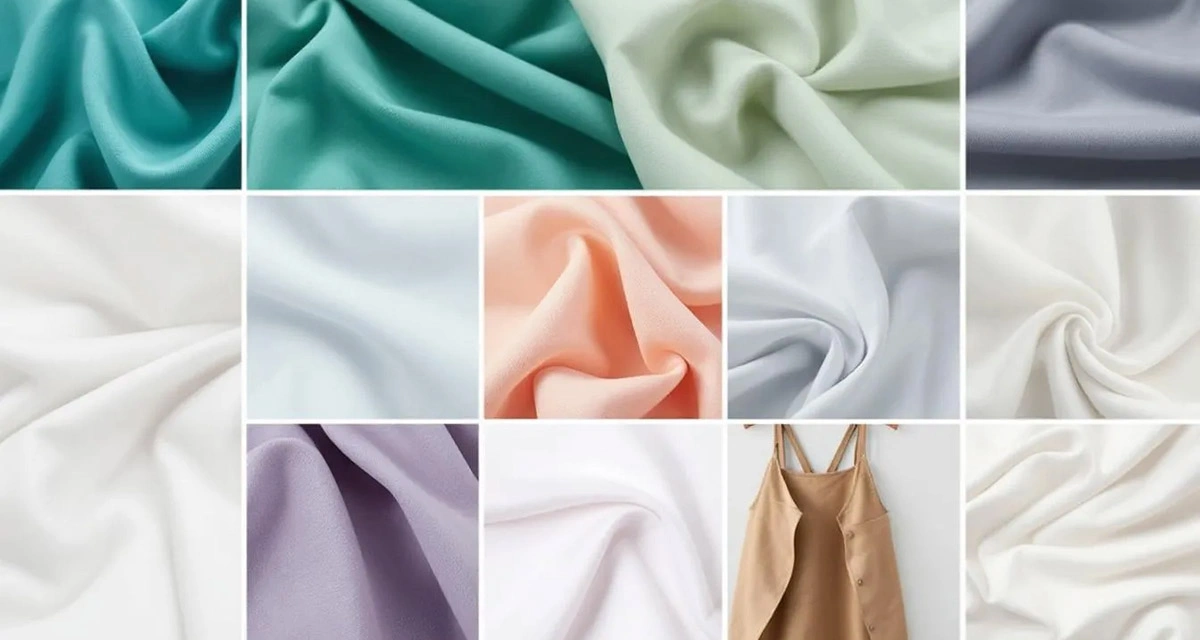
Poly-cotton's main markets are the ones where fabric gets washed hard and replaced on a schedule. Uniform programs, workwear brands, hospitality linen and school-wear makers all buy on the same logic: predictable shrinkage, stable color through multiple washes, and a cost below pure cotton. These fabrics are also practical for casual clothing, though retail apparel uses the softer CVC and 50/50 knits instead. Avoid hot water when washing a polyester cotton blend to help prevent damage.
| End use | Common blend & construction | Why it fits |
|---|---|---|
| Industrial workwear | 65/35 or 80/20 twill/drill, 195–260 g/m² | Abrasion resistance, low shrinkage through industrial washing |
| School uniforms | 65/35 twill (trousers, skirts), TC poplin (shirts) | Holds shape and color over daily wear |
| Chef & hospitality wear | 65/35 twill or poplin | Crease resistance, easy laundering |
| Shirting & linings | 80/20 or 90/10 poplin, pocketing | Crisp, light, low cost |
| Bed sheets, bed linens & curtains | 50/50 or TC percale-style plain weave | Used across home textiles; cotton polyester blends suit durable curtains and drapes, with fewer wrinkles and faster drying than cotton |
| T-shirts & sweatshirts | 50/50 or CVC jersey/fleece | Cotton-like softness with less shrinkage |
For workwear-specific options see MH's workwear fabric and school uniform fabric ranges, including the OEKO-TEX-certified T/C 80/20 twill workwear fabric at 195 or 235 g/m² and 150 cm width, as well as poly cotton twill fabric for uniforms and jackets and the durable T/C 65/35 twill fabric for workwear.
Sourcing Polyester Cotton Blend Fabric from MH
MH (Ningbo MH), founded in 1999, supplies woven fabrics and sewing materials to garment manufacturers, uniform makers and fabric wholesalers in more than 150 countries, and its TC range is built around exactly those repeat-program fabrics: 65/35 and 80/20 twill and drill, 65/35 ripstop, TC and 90/10 poplin, and 80/20 or 65/35 pocketing, backed by MH's global garment accessories and tailoring materials network.
What sets poly-cotton sourcing through MH apart is scope. Polyester content affects hand, care, and sustainability considerations when specifying an order. With 9 factories covering around 350,000 m², 3,000+ employees and a network of 2,000+ partner manufacturers behind roughly 10,000 sewing materials, the same supplier that dyes the twill can also send the polyester thread, buttons, zippers and reflective tape that finish a workwear garment. Dyed-to-order twills are quoted against ratio, yarn count, density, weight and width, with published MOQs of 5,000 m per color and 25-35 day lead times on the product pages.
For embroidery logos and detailing on uniforms, MH also supplies 150D/2 rayon embroidery thread alongside fashion fabrics like wholesale chiffon dress and scarf fabric, 93% polyester 7% spandex stretch woven fabric, 180T pongee rainproof fabric, polyester rib knit polo shirt collar fabric, and 60gsm PP nonwoven fabric for medical and agricultural uses. For pricing and ordering logistics, see the companion cotton polyester blend fabric wholesale guide.


Frequently Asked Questions
What is polyester cotton blend fabric?
Polyester cotton blend fabric is cloth spun from yarns that mix polyester and cotton fibers, usually at 65/35, 80/20, 50/50 or 60/40. Polyester adds strength, low shrinkage and wrinkle resistance, while cotton adds softness and absorbency. It's widely used for workwear, uniforms, shirting, linings and bedding.
What is the difference between TC and CVC fabric?
TC fabric is polyester-majority, such as 65% polyester / 35% cotton or 80/20. CVC ("chief value cotton") is cotton-majority, typically 60% cotton / 40% polyester. TC is firmer, more stable and cheaper; CVC feels closer to cotton and is common in retail knitwear and casual shirts.
Which polyester cotton ratio is best for workwear and uniforms?
65/35 is the most common ratio for uniforms and workwear because it balances wearing comfort with durability through repeated washing. 80/20 is used where cost and stability matter more than softness, such as drill trousers and pocketing. Workwear twills typically weigh 195-260 g/m², for example MH's 80/20 drill at 195 g/m² and 65/35 twill at 240 g/m².
Does polyester cotton blend fabric shrink or pill?
Poly-cotton shrinks less than 100% cotton, and shrinkage and pilling also depend on how you wash and dry it. Shrinkage falls as the polyester share rises. To help prevent shrinkage, wash it in cold water and dry it on low heat to maintain fabric integrity. It does pill more than pure cotton, because strong polyester fibers hold the surface fuzz in place instead of letting it break off. Tighter weaves and low-pill polyester fibers reduce pilling. Polyester is oleophilic, so oily marks can cling more stubbornly than water-based stains.
Is polyester cotton blend fabric breathable?
It's more breathable than 100% polyester, with better moisture management, but less absorbent than cotton. Standard moisture regain is 8.5% for cotton and 0.4% for polyester, so the higher the cotton share, the more the cotton fabric can absorb moisture, while higher polyester content improves moisture wicking and moisture-wicking properties. CVC and 50/50 blends feel most comfortable in hot conditions. For care, press on low to medium heat or medium heat since polyester is more heat-sensitive.
Conclusion
Polyester cotton blend isn't one fabric. It's a family whose behavior is set by three things: the ratio, the construction and the weight. TC ratios like 65/35 and 80/20 dominate workwear, uniforms and linings because they wash and wear predictably; CVC and 50/50 knits serve apparel that has to feel like cotton.
