
What is the Most Durable Couch Fabric?
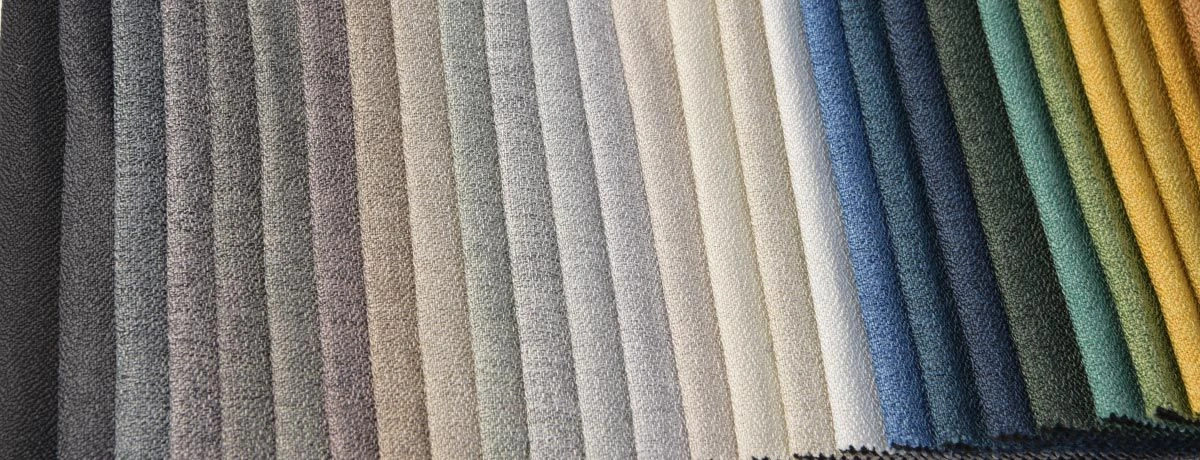
The most durable couch fabrics are tightly woven synthetics, leather, and high-performance blends that pass 30,000 or more Wyzenbeek double rubs.
For furniture makers, upholstery wholesalers, importers, and other B2B buyers sourcing fabric for manufacturing or commercial use, that means the strongest options usually include solution-dyed olefin, microfiber/polyester, leather (and PU/PVC), and treated performance fabrics when abrasion resistance, lifespan, and maintenance matter.
Key Takeaways
- Durability is measured in Wyzenbeek double rubs or Martindale cycles, not adjectives: heavy-duty residential fabric passes 30,000+ double rubs; contract-grade passes 100,000+.
- The most durable options for volume upholstery are solution-dyed olefin, microfiber/polyester, leather (and PU/PVC), and treated performance fabrics like Crypton.
- Fiber + weave + finish together determine longevity: tight weave and high yarn count resist snagging more than fiber choice alone.
- For B2B orders, specify fiber, GSM/weight, abrasion rating, finish, width, MOQ, and lead time, not just "durable fabric".
What Makes a Couch Fabric Durable?
Durability is a fabric's ability to resist abrasion, pilling, snagging, fading, and the effects of daily wear over years of long-term use, especially on frequently used family seating.
Synthetic filament fibers like polyester, nylon, and olefin generally outlast natural fibers against abrasion and resist pilling and snagging better in high-traffic seating, making them reliable durable fabrics. Natural fibers such as cotton and linen can approach the same performance when tightly woven and finished with a protective coating, but they generally need more care.
Weave matters as much as fiber: a dense, high-yarn-count construction is considered durable because it has fewer exposed floats to catch and fray, and weave tightness also supports structural integrity.
How Is Couch Fabric Durability Measured?
The single most useful number on an upholstery spec sheet is the abrasion rating, because it is the clearest measure of a fabric's durability. Ask for it in writing before you quote a program, because "durable" means nothing without a test method and a cycle count. The rub count is one of the clearest ways to judge whether upholstery will hold up on sofas or chairs. It is also central when evaluating furniture upholstery.
| Use grade | Wyzenbeek (double rubs) | Martindale (cycles) | Typical application |
|---|---|---|---|
| Light domestic | 9,000–15,000 | 10,000–20,000 | Occasional-use seating, décor |
| Heavy domestic | 15,000–30,000 | 20,000–40,000 | Family sofas, everyday couches |
| Heavy-duty residential | 30,000+ | 40,000+ | High-traffic homes, pets, kids |
| Contract / commercial | 100,000+ | 40,000–100,000+ | Hospitality, office, healthcare |
For a family-sofa program, we've found 35,000 double rubs or 35,000+ Martindale cycles is a better floor; for contract or hospitality buyers, heavy commercial upholstery should clear 35,000+ double rubs at minimum, though 100,000+ plus a matching finish package is still preferable.
What Is the Most Durable Couch Fabric? (Top Options)
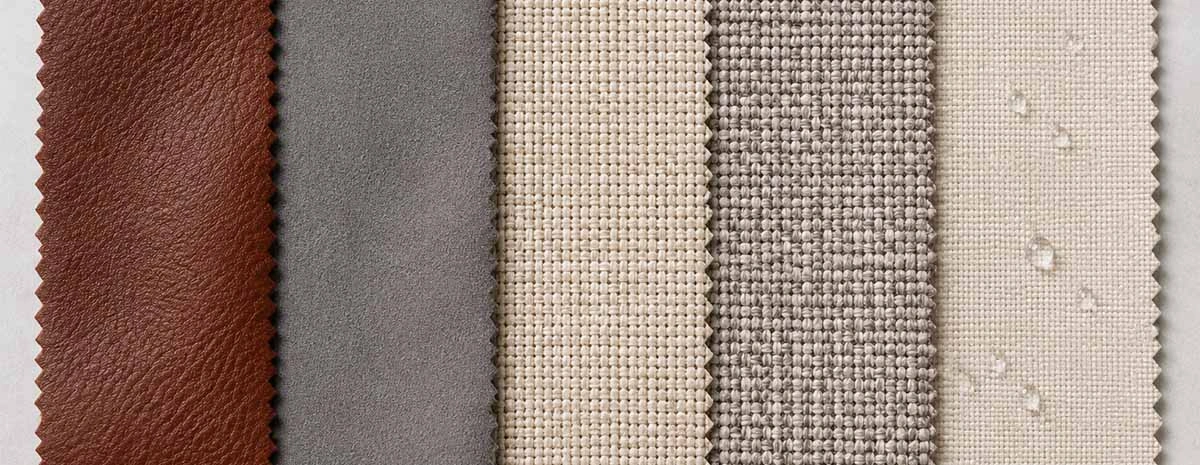
For wholesale and manufacturing volume, these five fabric families are among the most durable fabrics for couch upholstery, including polyester sofa fabrics designed for durability and easy care, delivering the best mix of abrasion resistance, cost, and supply consistency. Each suits a different price point and end customer, so the right answer depends on the program, not on a single "winner."
| Fabric | Durability profile | Best-fit B2B use | Relative cost |
|---|---|---|---|
| Leather / PU / PVC | Scratch & stain resistant; compared with PU/PVC, real leather is highly durable, and natural leather resists spills and stains, develops a soft texture as it ages, and high-quality top-grain or full-grain hides gain character over time while helping mask scratches | Premium sofas, commercial seating, leather furniture | High (genuine), Low–Mid (PU/PVC) |
| Microfiber / polyester | Tight synthetic weave, high double-rub, highly durable upholstery option with a very dense surface that helps resist spills and snagging, plus it is highly stain-resistant and easy to clean | Family sofas, pet-friendly lines | Low–Mid |
| Olefin (polypropylene) | Solution-dyed, fade & moisture resistant, with added resistance to stains, discolouration, and mildew; solution-dyed fibers also resist sun fading, so bright colors are less likely to fade quickly in sunny rooms | High-traffic, indoor-outdoor, contract | Low–Mid |
| Performance blends (poly-cotton, poly-linen) | Synthetic strength + natural look, treatable with a stain resistant finish | Mid-market apparel-of-the-home | Mid |
| Crypton / treated performance | Moisture barrier, antimicrobial, stain rejection | Healthcare, hospitality, kids/pets | Mid–High |
Taken together, these five categories compare different sofa materials and rank among the best sofa materials for balancing durability, feel, and cost.
Chenille is thicker than velvet and very durable, and different fabric types have unique characteristics that affect both performance and hand-feel; Holland velvet upholstery fabric without raised loops can still work in homes even if velvet and silk are chosen more for a luxurious feel and aesthetic appeal than overall comfort. In practice, these are all fabric options with different trade-offs rather than one universal winner.
Natural vs Synthetic Fibers for Upholstery
Synthetic fibers win most durability comparisons across upholstered furniture, but natural fibers still have a place where breathability and look justify the trade-off. The practical split for a sourcing buyer: synthetic fiber options for high-traffic and easy-care programs, while buyers compare natural and synthetic fabrics based on traffic level, maintenance, and desired look.
| Fiber | Durability | Care | Notes for buyers |
|---|---|---|---|
| Polyester / microfiber | High | Easy | Best value abrasion resistance |
| Olefin | High | Easy | Solution-dyed, fade/moisture resistant |
| Nylon | Very high | Easy | Strong; often blended for resilience |
| Wool | High | Moderate | Naturally stain/flame resistant, premium |
| Cotton | Medium | Moderate | Affordable, wrinkles/stains unless treated |
| Linen | Medium | High | Elegant look, needs preventative care |
Wool deserves a mention: it's the one natural fiber that combines durability with natural stain and flame resistance, and wool fibers also recover well from compression and resist soil better than many other fibers, which is why it appears in premium and contract lines despite the cost, though many fabrics can perform well when construction and end use are matched correctly.
Chenille and heavy velvet can also be more hard-wearing on fabric sofas than shoppers expect, though that still depends on construction.
What Should B2B Buyers Specify When Sourcing?
Before you request a quote, decide the abrasion grade, fiber, finish, and overall material and maintenance requirements the program needs, because those lines drive both price and returns and differ between upholstery fabric and other durable options like TC 65/35 twill fabric for uniforms and workwear. A vague brief ("something durable") gets you vague pricing and inconsistent lots. A precise brief gets you comparable quotes and repeatable reorders.
-
Fiber content — compare different material specs, such as 100% polyester, olefin, or a poly-cotton ratio, instead of asking for something generic; for example, school-uniform buyers often choose polyester-cotton uniform fabrics.
-
Weight / GSM — heavier constructions generally wear longer for seating; canvas also offers structural resistance to stretching and tearing, is extremely durable, but lacks comfort, so it usually suits function-first applications, while lighter options like chiffon fabric for apparel prioritize drape and feel over abrasion resistance.
-
Abrasion rating — Wyzenbeek double rubs or Martindale cycles, with the test named.
-
Finish — stain-resistant, waterproof, antimicrobial, or flame-retardant as required; only treat a shortlisted choice as a durable material when the abrasion rating and finish both support that claim, and some synthetic performance fabrics, including PU and PVC artificial leather upholstery, may use multi-layer construction to limit stretching.
-
Width and MOQ — usable width affects yield; MOQ affects landed cost.
-
Lead time and lot consistency — critical for production planning and reorders.
Sourcing Durable Couch Fabric from MH (Supplier Overview)
MH (Ningbo MH), established in 1999, is a China-based garment-materials and fabric supplier serving buyers in over 150 countries, and durable upholstery fabric is part of a catalog built for wholesale and manufacturing volume. That footprint lets a furniture manufacturer or importer consolidate upholstery fabric, thread, tape, zippers, and trims under one supplier instead of managing a dozen.
For furniture makers, upholstery wholesalers, and importers, working with a supplier at this scale means:
-
Consistent lots — polyester, microfiber, and olefin upholstery woven to repeatable weight and abrasion performance across reorders.
-
One-stop materials — pair sofa fabric with matching sewing thread supply for upholstery production, webbing, tape, and trims from the same source.
-
Custom specs — fiber, GSM, abrasion rating, width, and finish specified to your program, with MOQ agreed up front, and coordinated with customized polyester sewing threads where needed.
If you're comparing upholstery quotes, ask any supplier for fiber content, GSM, abrasion rating (Wyzenbeek or Martindale), finish, width, MOQ, and lead time in writing. MH's team quotes against those same variables so you can compare like-for-like.
Browse the upholstery fabric range →


For related sourcing reading, see Best Fabric Couch for Hot Weather: A Guide and The Ultimate Guide to Choosing the Best Fabric for Upholstery.
Frequently Asked Questions
How is upholstery fabric durability measured? Durability is measured by abrasion resistance using the Wyzenbeek test (double rubs) in North America or the Martindale test (cycles) in Europe and Asia. Heavy-duty residential fabric passes 30,000+ double rubs; contract-grade passes 100,000+. Always confirm which test a mill ran, since the two scales don't convert directly. Regular cleaning helps extend upholstery lifespan because dust and dirt increase wear over time.
Is polyester or microfiber more durable for sofas? Both are durable synthetics. Microfiber is a tightly woven fine-filament polyester that offers a suede-like hand with strong stain and abrasion resistance, making it popular for pet- and kid-friendly sofas. Standard woven polyester is a lower-cost option with similar wear performance for general-use seating, while some delicate fabrics need professional cleaning rather than the easy-care upkeep these materials can handle when you sit on them daily.
What abrasion rating should I specify for a family sofa? For everyday family use, specify a minimum of 15,000–30,000 Wyzenbeek double rubs, and 30,000+ for high-traffic homes with pets or children. For hospitality or commercial seating, hold out for 100,000+ double rubs plus a stain-resistant or moisture-barrier finish.
What information do I need to order upholstery fabric from a supplier? Specify fiber content, weight/GSM, abrasion rating (and test method), finish (stain-resistant, waterproof, antimicrobial, flame-retardant), width, color, MOQ, and lead time. Providing these upfront lets a supplier like MH quote accurately and hold consistent lots across reorders.
