
Modern Sofa Fabric: Types, Durability Specs & B2B Sourcing Guide
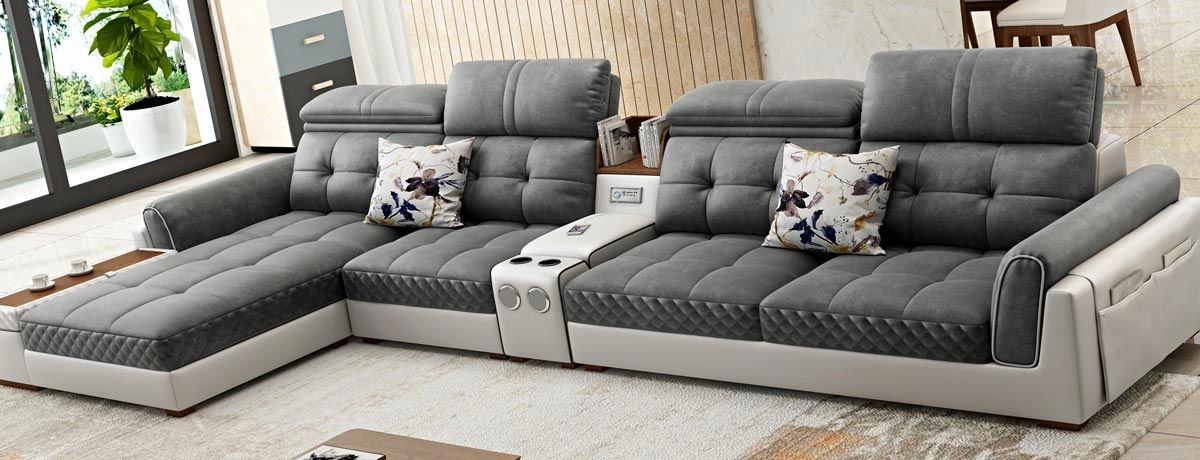
Modern sofa fabric is upholstery-weight cloth engineered to survive daily seating, graded by three numbers a buyer can put on a purchase order: abrasion resistance (Martindale rub count), weight (GSM), and fiber composition. The label "modern sofa fabric" covers everything from polyester microfiber to poly velvet, chenille, boucle, and coated faux leather.
What actually separates one roll from another on a spec sheet is not the marketing name but the rub count, the grams per square metre, and how the fiber blend holds color and resists pilling.
- ✓Judge sofa fabric by spec, not name: Martindale rub count, GSM weight, and fiber blend.
- ✓Residential upholstery usually needs 15,000–25,000 rubs; contract/commercial needs 30,000+.
- ✓Polyester and poly blends dominate modern sofa fabric for cost, colorfastness, and easy care.
- ✓Performance/waterproof finishes (solution-dyed, PU-coated) add stain and moisture resistance.
- ✓Spec fiber, weight, rub count, width, backing, finish, and MOQ before you request a quote.
What Counts as "Modern Sofa Fabric"?
Modern sofa fabric is upholstery cloth built for seating rather than apparel or curtains, so it is defined by performance specs such as heavier GSM, tighter weave, backing, abrasion resistance measured by Martindale rub count, and fiber composition. In practical buying terms, that usually means materials like polyester microfiber, poly velvet, chenille, boucle, and coated faux leather chosen to hold shape, resist fading, and clean easily in everyday use.
For furniture manufacturers, upholstery wholesalers, importers, and other B2B buyers, those specs are not minor details—they determine whether a sofa meets the right durability, price point, and visual brief for its market. This guide focuses on how to compare modern sofa fabric types, judge quality from the numbers, weigh care and waterproof or performance finishes, match fabric to sofa styles, understand liner fabrics and customization options, and choose the right material for production and sourcing from manufacturer MH.
How Do You Judge Sofa Fabric Quality? (Spec Sheet Basics)
Sofa fabric quality is measured, not felt, and four specs decide whether a fabric survives its intended use. Abrasion resistance is the headline number; a fabric rated at 25,000 Martindale rubs will outlast one at 12,000 in the same seat. The other three, weight, composition, and colorfastness, tell you how it will feel, wash, and hold color over years of use. For example, a 100% polyester super soft jaguar sofa fabric can be engineered to medium or heavy weight with customizable width and color while maintaining wash durability, so always check those details. Ask for these on every quote, because "it feels durable" is not a purchase-order spec.
| Spec | What it measures | Typical upholstery range | Why a buyer cares |
|---|---|---|---|
| Martindale rub count | Abrasion resistance | 15,000–100,000 rubs | Predicts real-world seat life |
| Weight (GSM) | Fabric density / hand | ~300–600+ g/m² | Heavier usually = more durable |
| Composition | Fiber blend | 100% poly to poly-cotton blends | Drives cost, care, and feel |
| Colorfastness (rub/light) | Fade & color transfer | Grade 4–5 (of 5) | Prevents fading and dye rub-off |
In our experience, the single most common sourcing mistake is buying on hand-feel and skipping the rub count. A plush chenille that feels premium at 12,000 rubs will pill and thin in a high-traffic sofa long before a plain microfiber rated at 40,000.
What Are the Main Types of Modern Sofa Fabric?
Modern sofa fabric for fabric sofas splits into a handful of fiber-and-construction families, and each carries a predictable durability, hand, and price profile. The table below is the version worth keeping on a sourcing sheet, because it maps each fabric to a rough rub count and a best-fit order rather than to a mood. Note that the same fiber can be woven to very different specs, so treat these as starting bands, not guarantees. Cotton has a soft feel but is more prone to staining and fading. Wool upholstery can be exceptionally long-lived and naturally resilient.
| Fabric type | Typical Martindale | Hand & look | Best-fit application | Relative cost |
|---|---|---|---|---|
| Polyester microfiber / suede | 30,000–100,000 | Smooth, matte, easy-clean | High-traffic & family sofas | Low–Mid |
| Chenille | 15,000–30,000 | Soft, plush, textured | Comfort-led residential | Mid |
| Polyester velvet | 15,000–50,000 | Lustrous pile, rich color | Statement & premium lines | Mid–High |
| Linen / linen blend | 10,000–20,000 | Natural matte, casual | Premium casual, low-traffic | Mid–High |
| Boucle | 15,000–30,000 | Looped, nubby, on-trend | Modern designer pieces | Mid |
| Jacquard | 20,000–40,000 | Woven pattern, decorative | Traditional & patterned sofas | Mid |
| Faux leather (PU/PVC) | 20,000–50,000+ | Wipe-clean, uniform | Contract, kids, commercial | Mid |
-
Polyester microfiber is the workhorse: high rub count, strong colorfastness, and the lowest care burden, which is why it dominates volume upholstery fabric orders.
-
Chenille and velvet sell on feel and appearance; chenille is soft, comfortable, and usually more practical than delicate velvet for everyday upholstery, while Holland velvet fabric for luxurious upholstery is an example of performance velvet that is more durable and more stain-resistant than traditional velvet.
-
Boucle is trend-driven demand right now; it is popular in contemporary furniture but can snag from pet claws, and durability still varies widely between suppliers.
How Do Customization Options Affect Sourcing?
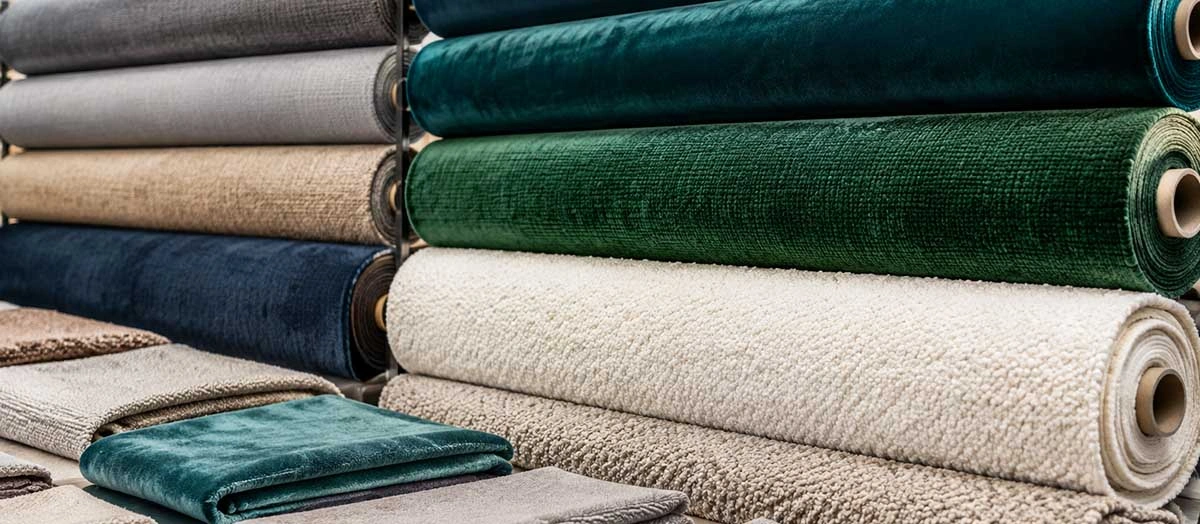
Customization at the sofa level flows straight back into your fabric order, so it pays to plan the two together. Customization may also include sectional orientation, such as L-shape or U-shape layouts, because that changes fabric yield and planning. Fabric type, backing, width, color, and design are the variables a manufacturer specifies; each one changes the roll you buy and the MOQ you can hit. For hidden components like linings or dust covers you might specify a lighter polyester pongee fabric for linings, while visible show fabric carries a heavier GSM and higher rub count. The four choices below are the ones that most often affect a quote.
-
Fiber / weave — velvet, chenille, microfiber, or boucle set the hand, the rub count, and the price band.
-
Backing — a laminated or knit backing improves dimensional stability and tailoring; specify it or accept greige-only performance.
-
Width — most upholstery runs 140 cm wide; confirm width so your cut plan and yield calculations hold.
-
Color / dye method — solution-dyed fibers hold color far better than piece-dyed for fade-prone use.
Which Sofa Styles Pair With Which Fabrics?
Sofa style and fabric are a matched pair, and choosing them together avoids the classic mismatch of a delicate cloth on a heavy-use frame; the right fabric should suit both the sofa’s look and the room or living space it will sit in. Sleek modern and mid-century frames read best in flat, tight-woven fabrics, and mid-century modern sofas are defined by sleek lines and minimalistic design; tufted Chesterfields need a pile or leather-look that catches light in the buttoning. Use the pairing logic below when you plan a collection of modern sofas or couches, not just a single SKU.
| Sofa style | Fabric that fits | Sourcing note |
|---|---|---|
| Modern / minimalist | Flat microfiber, tight weave | High rub count, clean drape to suit the home’s overall design style |
| Mid-century modern | Boucle, textured poly | On-trend but check durability |
| Chesterfield | Velvet, faux leather | Pile or sheen for tufting |
| Traditional | Jacquard, chenille | Pattern and plush hand |
| Contract / hospitality | Coated PU, performance poly | 30,000+ rubs, wipe-clean |
Contemporary sofas often include sectional and recliner options, so fabric choice should suit how the piece will be used.
What Are Sofa Liner and Lining Fabrics For?
Sofa liner and lining fabrics are the hidden layers that give a finished sofa its structure and seat life, and they are a spec line in their own right. Liner fabric covers the inner frame to create a smooth base under the show fabric, while lining layers work with high-density foam cushioning to provide superb comfort and support and help hold the sofa's shape under repeated load. For these applications, lighter woven materials such as 170T polyester pongee lining fabric or more robust 190T polyester pongee fabric can offer an efficient balance of weight, durability, and cost. Lining fabric sits beneath the outer upholstery as a protective, comfort-adding layer. Modern synthetic liners outperform older cotton scrims on wear, moisture, and pest resistance, so choosing them well raises product value without touching the visible fabric.
Are Waterproof and Performance Fabrics Worth Specifying?
Waterproof and performance sofa fabrics have moved from niche to mainstream because they solve the two biggest post-sale complaints: stains and moisture damage. These are usually solution-dyed polyester or acrylic with a PU or fluorine-free coating that repels liquids and lets spills wipe off. Many fabric sofas, especially many modern fabric sofas, now have removable, washable covers to reduce maintenance worries. For any sofa headed to a household with kids or pets, or into hospitality, the easy-clean spec is often what closes the sale. Increasingly these fabric materials are also offered in recycled-content or lower-impact versions, which lets a brand market durability and sustainability in the same line; those same performance features are perfect for busy home areas and everyday living.
One practical spec to request is the cleaning code, because it tells the end customer exactly how to care for the fabric and cuts warranty disputes:
| Cleaning code | Meaning |
|---|---|
| W | Clean with water-based cleaner |
| S | Clean with solvent-based cleaner only |
| WS | Water- or solvent-based cleaner both safe |
| X | Vacuum / brush only, no liquid cleaning |
How Do You Choose the Right Sofa Fabric for Production?
Choosing production fabric comes down to three questions answered in order: where will it sit, how much space is available, how must it look, and how will it be cleaned? Start with end use to set the minimum rub count, then narrow by aesthetic (flat vs. pile, plain vs. pattern), and finish with the care spec so it matches the buyer's market.
Fabric sofas also come in formats such as loveseats, recliners, and sectionals, with sizes ranging from compact two-seaters to large sectionals. Coordinating products, such as cushions and matching bags for retail programs, may use polyester rib knit fabric for collars and trims or dedicated bag and luggage accessories for wholesale orders to create a coherent materials story across categories.
High-traffic and contract work points to microfiber, coated PU, or performance poly; premium low-traffic lines can carry linen, velvet, or boucle. Confirm the fabric is on-trend for your target market before you commit an order, since colors, texture cycles, and overall variety shift fast in upholstery, and buyers still need shapes and sizes that fit different living needs.
Sourcing Modern Sofa Fabric from MH (Supplier Overview)
MH (Ningbo MH), established in 1999, is a China-based garment-materials and fabric supplier serving buyers in over 150 countries, and its global garment accessories & tailoring materials network includes nine factories producing sewing thread, zippers, fabrics, and related products.
That footprint is what lets a furniture maker or wholesaler consolidate show fabric, liner, lining, thread, and trims under one supplier instead of managing several.
For furniture manufacturers, upholstery wholesalers, and importers, working with a supplier at this scale means:
-
Consistent lots — modern fabric sofas are often hand crafted and designed by skilled artisans, so repeatable rub count, weight, and shade help ensure consistent quality across production.
-
One-stop materials — pair sofa fabric with matching liner, lining, thread, and trims from the same source, backed by MH’s wholesale sewing thread supply and specialized polyester sewing thread manufacturing for large-scale production.
-
Global logistics expertise — a supplier with an established presence in 150+ countries, backed by recognized trade credentials including "Top 500 China Service Industry" and "AAA Trustworthy Company." Dedicated support is available to guide customers through quotes and delivery planning every step of the way.
-
Custom specs — fiber, weight/GSM, rub count, width, backing, and finish specified to your production needs, with MOQ discussed up front to help ensure the finished items match buyer requirements; for example, blended TC 65/35 twill fabric for upholstery-adjacent uses can be ordered with tailored specs for durability and breathability.
If you're comparing sofa-fabric quotes, ask any supplier for fiber composition, weight (GSM), Martindale rub count, width, backing, finish, cleaning code, MOQ, and lead time in writing. MH's team offers quick quote turnaround against those same variables, making sourcing comparisons easier and helping confirm specs align before ordering.
Browse the upholstery fabric range →

Frequently Asked Questions
What is the most durable fabric for a sofa?
For durability, high-rub-count polyester microfiber and coated faux leather lead the field, typically rated 30,000 Martindale rubs and up. They resist abrasion, hold color, and wipe clean, which is why they dominate family and contract upholstery. Plush options like chenille and velvet can work but should be specced with a backing and a confirmed rub count; in premium looks you might specify wholesale chiffon fabric for decorative pillows and accents rather than for the main seating area.
What is the best modern sofa fabric for high-traffic use?
Polyester microfiber and performance (waterproof-coated) poly are the best modern choices for high-traffic use, combining a high rub count, strong colorfastness, and easy cleaning at a low-to-mid cost. Faux leather (PU) is also strong for commercial and kid-friendly seating because it wipes clean and resists moisture.
What information do I need to order sofa fabric from a supplier?
Specify fiber composition, weight (GSM), Martindale rub count, width, backing type, finish, cleaning code, color/dye method, MOQ, and lead time. Providing these upfront lets a supplier like MH quote accurately and hold consistent lots across reorders, which is what keeps a multi-batch sofa program from drifting in shade or weight.
Is polyester or linen better for sofa upholstery?
Polyester is more durable, more colorfast, and easier to care for, which makes it the default for high-use and value lines. Linen offers a natural matte look prized in premium casual furniture but has a lower rub count (often 10,000–20,000) and creases more, so it suits lower-traffic, higher-price pieces.
Conclusion
Modern sofa fabric is a spec-driven purchase, not a name-driven one. Whether the roll is velvet, chenille, microfiber, or coated performance cloth, the numbers that protect your margin and your return rate are the same: Martindale rub count, GSM weight, fiber composition, and colorfastness, matched to the exact end use.
