
Material Corduroy: Versatile Fabric for Fashion and Upholstery

Corduroy is a cut-pile fabric with raised vertical ridges called wales, woven in a plain (sometimes twill) ground and graded by how many wales fit into one inch. That single number, from about 1.5 wales per inch on jumbo cord to 21 on pinwale, decides the fabric's weight, drape, and end use more than the fiber does.
Key Takeaways
- Corduroy is defined by its wale count (ridges per inch), not one fiber. Standard corduroy runs 8–13 wales/inch; pinwale reaches up to 21; jumbo/elephant cord drops to 1.5–6.
- Fabric weight tracks wale size: pinwale sits around 200–250 GSM, standard around 260–340 GSM, and jumbo cord 400–500 GSM.
- Fiber is a separate spec: 100% cotton for softness and dyeing, cotton/polyester for wrinkle resistance and cost, cotton/spandex (2–5%) for stretch.
- For B2B orders, confirm wale count, weight (GSM), width, fiber blend, finish, MOQ, and lead time up front, since each drives price and consistency.
What Is Corduroy Woven Fabric?
Corduroy is a ridged cut-pile woven fabric built from a plain or twill ground weave with extra filling yarns floated over the surface, then cut and brushed into raised vertical cords. Those cords, the wales, are what you see and feel, and the wale count determines the fabric’s weight, drape, and typical uses.
For B2B buyers, textile professionals, and fashion or upholstery manufacturers sourcing to spec, understanding wale grades, fiber blends, fabric weights, and pile direction is central to choosing the right finish, durability, and cost for the end use. This guide breaks down corduroy types, apparel and upholstery applications, how it compares with other pile fabrics, and the sourcing details that affect ordering decisions.
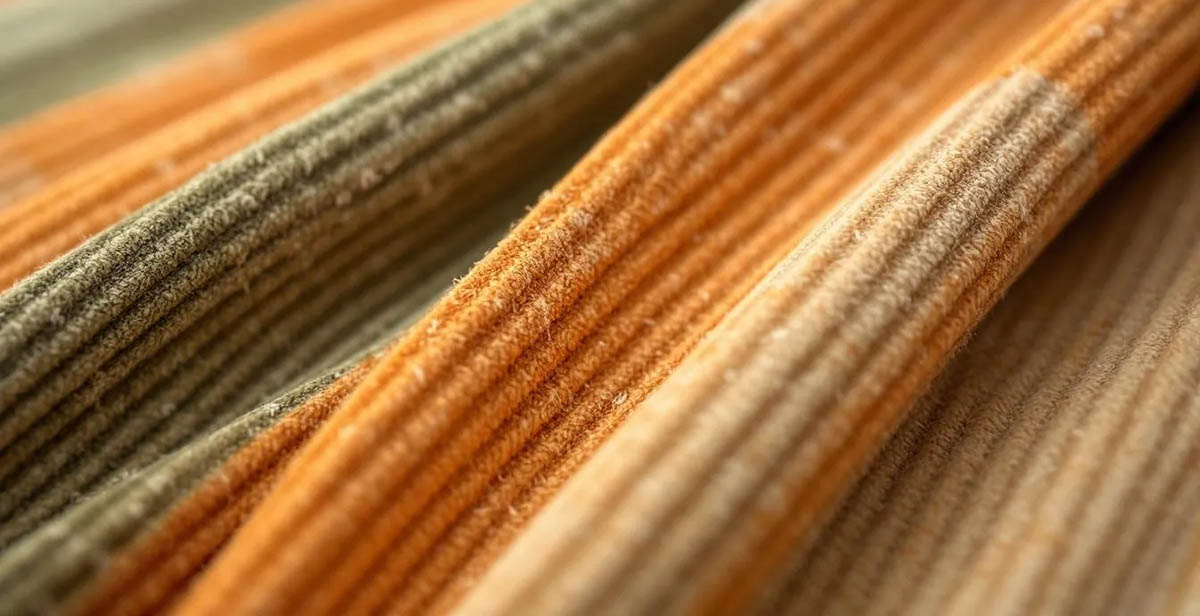
What Are the Types of Corduroy, Including Pigment Dyed Corduroy?
Corduroy types are named by wale count, the number of ridges per inch; buyers may also see the number of wales or wale number listed as the same spec, running from roughly 1.5 on the heaviest cord to 21 on the finest. Wale count sets weight, drape, and durability, so buyers select by wale first and fiber second. The chart below shows how the main different types compare on ridge fineness.
| Type | Wales / inch | Typical weight | Common blend | Best for |
|---|---|---|---|---|
| Pinwale (needlecord) | 16–21 | 200–250 GSM | 100% cotton, cotton/poly | Shirts, dresses, children’s wear |
| Standard / mid-wale | 8–13 | 260–340 GSM | 100% cotton, cotton/spandex | Trousers, jackets, casual wear |
| Wide wale | 6–8 | 340–400 GSM | Cotton, cotton blends | Jackets, overalls, retro fashion |
| Jumbo / elephant cord | 1.5–6 | 400–500 GSM | Cotton, cotton/poly | Upholstery, heavy workwear |
| Stretch corduroy | 8–16 | +2–5% spandex | Cotton/spandex | Slim-fit apparel, kids' wear, active; spandex versions are stretchy and often used for children's garments |
| Pigment-dyed | any | varies by base | 100% cotton | Washed-look fashion garments; pigment dyed corduroy develops a mottled pattern that becomes more visible with washing |
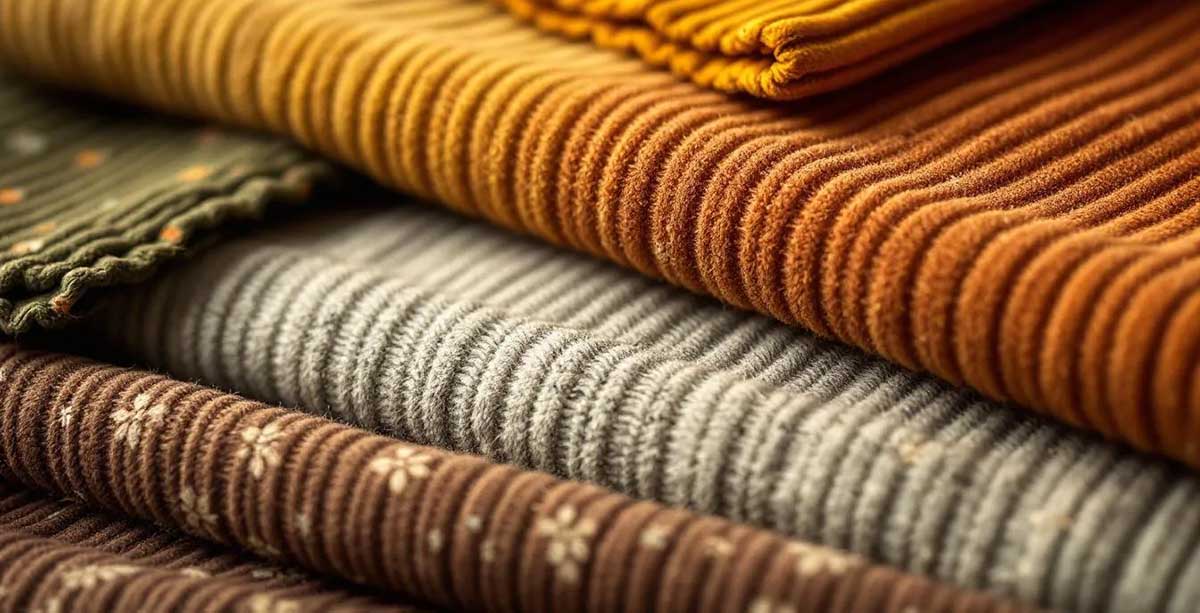
What Is Corduroy Durable Fabric Used For?
Corduroy spans apparel, home textiles, and workwear. In clothing it appears in trousers, pants, jackets, overalls, skirts, and shirts, valued for warmth and texture in autumn and winter ranges, with lighter pinwale and pigment-dyed pieces extending it into transitional seasons and suiting children's clothing. For drapier, warm-weather garments, many buyers will pair corduroy programs with wholesale chiffon fabric for dresses and scarves. Retro and vintage styling has kept demand steady in fashion sourcing, and sewists also choose corduroy fabrics for handbags and other garments.
In interiors, heavier grades work as sofa upholstery, pillows, and curtains, where the ridged surface adds depth and hides light wear. Buyers often compare corduroy with Holland velvet fabric for luxurious upholstery when planning coordinated furniture and curtain programs. Workwear and uniforms use mid to wide wale cotton because it is a durable fabric with good abrasion resistance, and heavier grades are also practical for furniture repair. Matching the wale grade to the traffic level is the practical rule: fine wales for garments, jumbo cord for furniture and heavy-use pieces.
Corduroy vs Velvet and Other Pile Fabrics
Corduroy, velvet, and velveteen are all cut-pile fabrics, but corduroy is the only one organized into distinct vertical wales. Buyers sourcing outerwear might specify corduroy for trim or panels alongside 180T Pongee Geena rainproof fabric for shell layers. Velvet carries a continuous short pile with no ridges and a fluid drape, which suits formalwear and soft furnishings, while corduroy's ridged, harder-wearing surface suits casual apparel and heavy upholstery. By the 19th century, corduroy was often called poor man's velvet, reflecting its place as a more affordable alternative. If a project needs visible texture and durability, corduroy usually wins; if it needs sheen and drape, velvet does. It also saw a revival in the 1970s, which helps explain its lasting retro appeal.
Why Source Corduroy From MH
MH (Ningbo MH), founded in 1999 and serving buyers in 150+ countries, supplies corduroy across the full wale range, from pinwale needlecord to jumbo upholstery cord, in cotton, cotton/polyester, and stretch blends, with options that can suit sourcing for corduroy garments in China, India, and other countries.
For B2B buyers, that means one supplier for the fabric plus its full component set, quotes built to your exact spec (fibre / wale count / weight-GSM / width / finish / MOQ / lead time), with fiber choice including fibers such as rayon also affecting environmental impact, lot-to-lot shade control, and documented global logistics, especially when pairing corduroy with high-quality embroidery thread in extensive color ranges.
Browse the corduroy fabric range →


Frequently Asked Questions
What is corduroy fabric made of?
Corduroy is most often made from cotton, or cotton blended with polyester for wrinkle resistance and cost, cotton with 2-5% spandex for stretch, or blends that also use wool or rayon. Fully synthetic corduroy fabrics exist for budget upholstery, similar to polyester uniform fabrics such as Klopmann Clothman, but corduroy made from synthetic fibers is not biodegradable. The fiber is a separate spec from the wale count and the woven extra sets that create the ribs, so always confirm the exact blend ratio before ordering yard corduroy fabric.
What does wale count mean in corduroy?
The number of wales is the number of raised ridges per inch across the woven surface, and the raised pile can flatten under pressure and create shiny patches, especially on broader wale corduroy. Standard corduroy has 8-13 wales per inch, pinwale up to 21, and jumbo or elephant cord as few as 1.5-6. Higher wale counts mean finer, lighter ridges; lower counts mean bolder, heavier cords.
What is the difference between pinwale and jumbo corduroy?
Pinwale (needlecord) is one of the different types of corduroys, packing 16-21 fine ridges per inch and weighing around 200-250 GSM, ideal for shirts and dresses and often paired with 150D/2 rayon thread for embroidery in childrenswear and fashion detailing. Jumbo or elephant cord has broad ridges at 1.5-6 wales per inch and weighs 400-500 GSM; with fewer ridges per inch, it has thicker cords, making the visual difference easy to spot. Wale count is the main difference; weight follows from it.
Is corduroy good for upholstery?
Yes, especially wide wale and jumbo cord in cotton or cotton blends, and careful washing helps preserve the ridged texture in upholstery applications. Their heavier weight (roughly 340-500 GSM) and abrasion resistance handle cushions, sofas, and curtains, while the ridged surface and dye depth hide light wear. For high-traffic furniture, choose lower wale counts; reserve fine pinwale for apparel.
What specs should I confirm when ordering corduroy wholesale?
Confirm six specs: wale count, weight in GSM, fabric widths, fiber blend ratio, finish (piece-dyed vs pigment/garment-wash, where pigment dye can create a distinctive washed pattern), and MOQ with lead time. Also request lot-to-lot shade bands and a signed lab dip to lock batch consistency, and if you are sampling or testing a small project, ask whether it’s available by the yard, since cut-pile fabrics can drift in shade and wale definition between lots. For accessory programs such as braids, trims, or fashion accents, you may also specify BCF Brazilian wool yarn for styling and braiding alongside corduroy apparel.
