
Chenille Fabric Sofa: A B2B Sourcing & Spec Guide
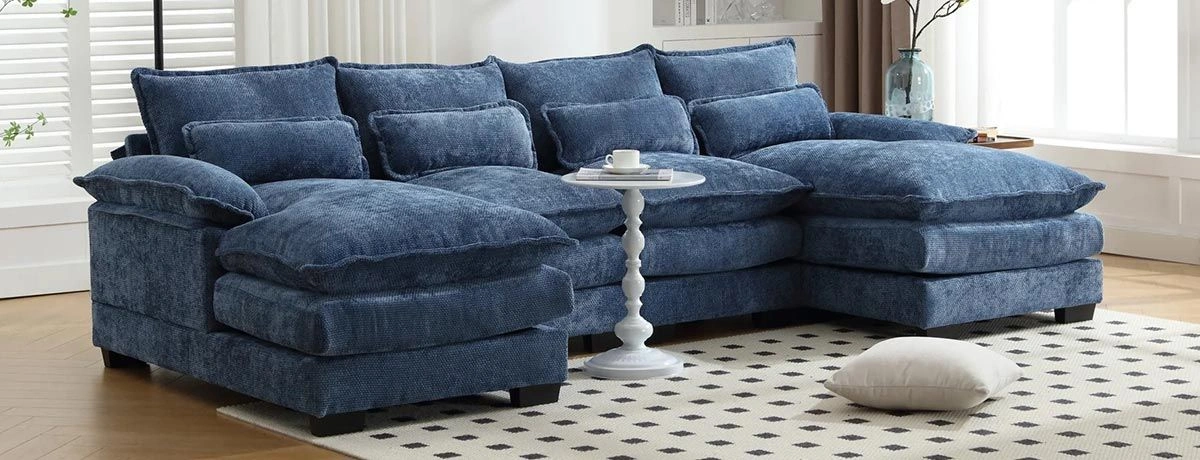
A chenille fabric sofa is a sofa upholstered in chenille: a woven fabric made from fuzzy piled yarn twisted between core yarns, which gives the surface a soft hand, subtle sheen, and durable texture for upholstery. That construction gives a chenille sofa its softness and depth of color, but sofa performance depends on the exact spec.
For furniture manufacturers, upholstery wholesalers, and furniture importers, the fabric that matters is defined by its fiber blend, weight, backing, and abrasion rating, not by the word "chenille" alone. The right chenille spec affects hand feel, wear life, color consistency, and overall value.
What Is Chenille Fabric? (Definition)
Chenille is defined by its yarn, not its fiber. Short pile lengths are locked between two twisted core yarns so the fibers stand out on all sides, giving the finished cloth a plush, velvety surface that catches light and shifts color as you move around it. Because the pile can be spun from polyester, acrylic, cotton, viscose, or a blend, the same "chenille" label can cover a $4/meter décor cloth or a premium contract-grade upholstery fabric. The weave and pile stay the same; the fiber blend is what changes the price, durability, and care profile on a purchase order.
How Is Chenille Upholstery Fabric Made?
The chenille yarn is created first, then woven. Pile yarns are cut into short tufts, caught between two core threads, and twisted so the tufts splay outward, that soft "caterpillar" is the chenille yarn. Woven into an upholstery cloth, usually over a stable backing, the pile forms the tactile face while the ground and backing carry the strength. The direction of the pile is why chenille shows a subtle two-tone shimmer, and why cut panels must be laid the same way ("napped") in production to keep color consistent across a sofa, much as consistent lay direction matters for polyester–viscose suiting fabrics.
Chenille can be woven from several fiber bases, and each changes the commercial profile, just as different constructions like chiffon fabric for fashion applications serve distinct markets:
| Fiber base | Typical hand & sheen | Durability | Common B2B use | Relative cost |
|---|---|---|---|---|
| Polyester chenille | Soft, bright, color-stable | High abrasion, easy-care | Volume sofa & sectional lines | Low–Mid |
| Acrylic / acrylic-blend | Soft, wool-like, fade-resistant | Good, UV-stable | Sunroom, indoor–outdoor | Mid |
| Cotton / cotton-blend | Natural matte hand, breathable | Moderate, can pill | Traditional, premium residential | Mid |
| Viscose-blend | Deepest luster, silky | Lower, dry-clean | Accent & luxury décor | Mid–High |
What Specs Matter When Sourcing Chenille for Sofas?
The word "chenille" tells a supplier almost nothing on its own. What defines a sofa-grade order is a short list of measurable specs: fiber blend, fabric weight, width, backing, abrasion resistance, and colorfastness. Get these on the purchase order and lots stay consistent across reorders; leave them off and you risk mismatched dye lots, weak seams, or a fabric that pills after a season.
| Spec | Typical sofa range | Why it matters |
|---|---|---|
| Weight (GSM) | 250–400 g/m² | Heavier = more body and durability for seating |
| Width | 140–300 cm | Drives yield and cutting layout |
| Backing | Woven / knit / acrylic latex | Adds dimensional stability and seam strength |
| Abrasion (Martindale) | 15,000–30,000+ rubs | Sets suitability for domestic vs heavy/contract use |
| Colorfastness (light/rub) | Grade 4–5 target | Resists fading and dye transfer |
| Composition | e.g. 100% poly, or poly/acrylic/cotton blend | Determines care, price, and feel |
In our experience, the single most common sourcing miss is abrasion. A décor-weight chenille rated for cushions gets ordered for seat panels, then wears through in months. Confirm the Martindale figure in writing before you quote a sofa program.
Why Do Manufacturers Choose Chenille for Sofas?
Chenille earns its place in a sofa line for three practical reasons: hand-feel, durability, and color depth. The piled surface feels plush and warm, which sells at retail. Woven over a stable backing, upholstery-grade chenille resists everyday abrasion well, many sofa qualities carry a Martindale rating in the 15,000–30,000 rub range. And because the pile catches light, a single base cloth can be piece-dyed into a wide, color-consistent range without changing the construction.
-
Soft, plush hand — the piled yarn gives a warm, inviting surface buyers can feel in the showroom.
-
Strong abrasion resistance — a dense weave and stable backing hold up to daily seating use, though heavy-duty applications like tactical gear call for laminate Cordura fabrics instead.
-
Rich, shifting color — the pile direction creates subtle two-tone depth across the panel.
-
Versatile blends — polyester for value and durability, acrylic for fade resistance, cotton for a natural hand, similar in concept to polyester–cotton twill fabrics used in workwear.
Chenille vs Other Upholstery Fabrics
Buyers rarely choose chenille in isolation; they weigh it against Holland velvet upholstery fabric, linen, and flat wovens for the same sofa program. The short version: chenille offers a softer, more forgiving surface than flat weaves and better everyday durability than most linens, while velvet reads more formal and shows crush and traffic marks faster.
| Chenille | Velvet | Linen-look weave | |
|---|---|---|---|
| Surface | Soft piled, textured | Dense short pile, formal | Flat, natural texture |
| Durability | High (blend-dependent) | Moderate, shows crush | Moderate, can wrinkle |
| Color depth | Rich, two-tone shimmer | Deep, luxurious | Muted, natural |
| Care | Easy (esp. polyester) | Higher-maintenance | Moderate |
| Best-fit | Family sofas, sectionals | Statement/accent pieces | Casual, relaxed interiors |
If a customer wants a plush look with real seating durability, chenille is usually the safer spec than velvet. Confirming the end use before you quote avoids the most common upholstery return, whether you are specifying indoor sofa chenille or durable Oxford fabric for more technical products.
Sourcing Chenille Upholstery Fabric from MH (Supplier Overview)
For sofa manufacturers, upholstery wholesalers, and furniture importers, working with a supplier at this scale means:
-
Consistent lots — chenille woven to repeatable GSM, width, and shade across reorders, so a sofa program stays uniform.
-
One-stop materials — pair the upholstery fabric with matching sewing thread, zippers, tape, and trims from the same source.
-
Global logistics experience — a supplier already shipping to 150+ countries with recognized trade credentials ("Top 500 China Service Industry," "AAA Trustworthy Company").
-
Custom specs — fiber blend, weight, width, backing, abrasion rating, finish, and design specified to your production needs, with MOQ and lead time discussed up front.
If you're comparing chenille quotes, ask any supplier for the fiber blend, GSM, width, backing, Martindale rub count, colorfastness grades, MOQ, and lead time in writing. Chenille upholstery is available in solid, textured, and printed designs, including options such as damask and jacobean patterns, as well as super soft polyester sofa fabrics for contemporary seating lines. MH's team quotes against those same variables so you can compare like-for-like.


Frequently Asked Questions
Is chenille a fabric or a yarn? Chenille is a yarn construction that is then woven into fabric. Short pile tufts are twisted between two core yarns to make the fuzzy "chenille" yarn, which is woven into upholstery cloth. Because it's a construction, the same chenille can be made from polyester, acrylic, cotton, or a blend, which is why "chenille" alone never fully describes a material on a purchase order.
Is chenille fabric good for sofas? Yes, when specified correctly. Upholstery-grade chenille combines a soft, plush hand with strong abrasion resistance, many sofa qualities carry a Martindale rating of 15,000–30,000+ rubs. Many chenille sofas also come with removable and washable cushion covers, but visible wear can show in high-use seating areas and the pile can snag from pet claws.
What is the most durable chenille for upholstery? Polyester and polyester-blend chenille generally offer the best balance of durability, color stability, and easy care for volume sofa lines. Acrylic blends add fade resistance for sun-exposed pieces. Regular vacuuming helps maintain chenille upholstery, and chenille sofas are sold in formats from two-seaters to sectionals. Match the fiber to the abrasion rating and end use rather than choosing on hand-feel alone.
What GSM and width should sofa chenille be? Sofa-grade chenille typically runs 250–400 GSM and 140–300 cm wide, with a stable backing. Heavier weights give more body for seat panels; wider goods improve cutting yield.
What information do I need to order chenille from a supplier? Specify fiber blend, weight (GSM), width, backing type, abrasion (Martindale) rating, colorfastness grades, color/shade, MOQ, and lead time, and coordinate compatible polyester sewing thread specifications at the same time. Providing these upfront lets a supplier like MH quote accurately and hold consistent lots across reorders. Chenille fabric can be spot cleaned with mild detergent, dry cleaning is typically recommended, and chenille upholstery fabric should not be machine washed.
Conclusion
Chenille's appeal for sofas comes from one flexible construction that pairs a soft, light-catching surface with real seating durability, across polyester, acrylic, and cotton blends that span value to premium. For furniture manufacturers, upholstery wholesalers, and importers, the key is precise specification, fiber blend, GSM, width, backing, and abrasion rating, rather than the single word "chenille".
