
What Is 210D Oxford Material and How Is It Used in Industrial and Bag Manufacturing?

In the competitive landscape of textile manufacturing, selecting the right base material determines the success of the final product. The choice of 210D Oxford is often based on criteria such as denier, weave, and intended application. 210D Oxford fabric remains a staple choice for industrial buyers and garment factories due to its balance of durability, flexibility, and cost-effectiveness.
210D Oxford fabric is made from 100% high tenacity nylon or polyester, and the 210D designation refers to the yarn thickness, making it lightweight yet strong. This guide provides procurement managers and distributors with the technical specifications, performance metrics, and sourcing protocols necessary for ordering 210D Oxford material. From understanding denier counts to navigating make-to-order customization, this overview ensures informed decision-making for large-scale production. The world relies on 210D Oxford fabric for its versatility and widespread use across various industries.
Oxford Fabric Overview
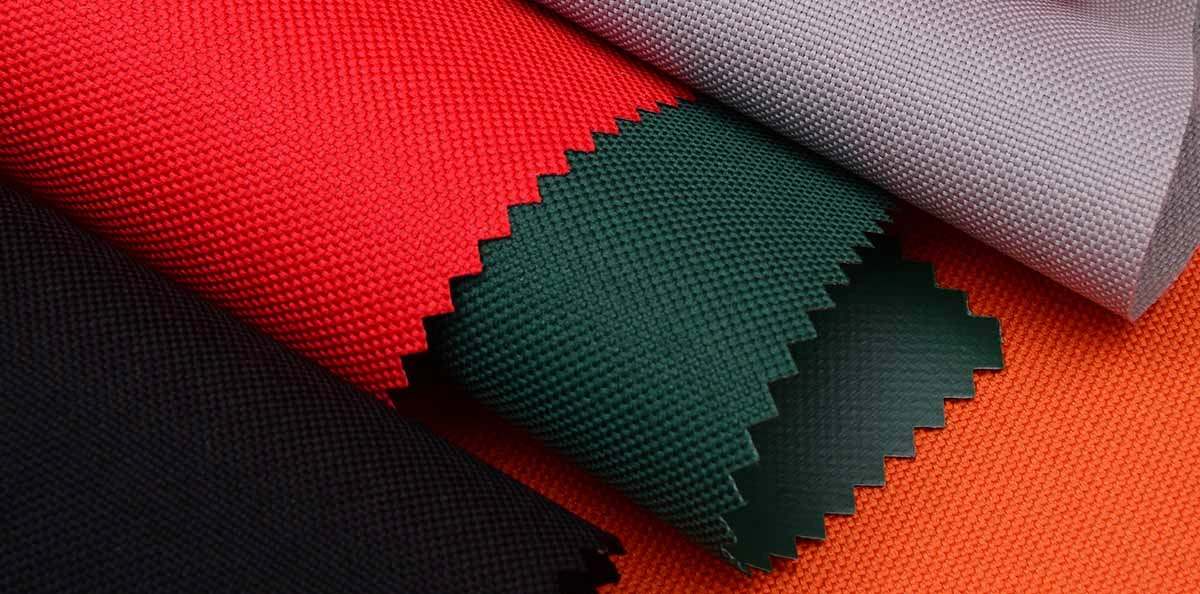
Oxford fabric is defined by its specific basket-weave structure. This construction interlaces multiple weft threads over an equal number of warp threads, resulting in a fabric that is breathable yet durable.
For industrial applications, manufacturers typically produce this fabric using polyester or nylon fibers. These synthetic fibers provide the necessary strength and resistance to environmental factors required for outdoor gear and luggage. The standard size for 210D Oxford fabric is a width of 58-60 inches (147 to 152 cm), which maximizes cutting efficiency for factory production lines. 210D Oxford fabric is available in a wide range of colors, including burgundy, black, navy, and red. It is typically sold in rolls, with each color available in 100 yard rolls.
Technical Specifications: Weave, Yarn, and Denier
To accurately specify material for a production run, buyers must understand the technical composition of 210D Oxford. The fabric is constructed using a basket-weave pattern, which enhances tensile strength and helps prevent tearing, making it suitable for outdoor applications. 210D Oxford is a lightweight, flexible canvas with a urethane coating on one side for improved water repellency. The weight of 210D Oxford fabric is approximately 4 oz per square yard. In terms of hand feel, the fabric is smooth and soft to the touch, providing comfort and quality for a variety of uses.
Understanding 210D
The "D" stands for Denier, a unit of measure for the linear mass density of fibers. It represents the mass in grams per 9,000 meters of the fiber. Therefore, 210D indicates a yarn weight of 210 grams per 9,000 meters.
-
Yarn Count: The 210D specification implies a fine yet sturdy yarn. It offers a smoother hand feel compared to heavier deniers.
-
Weave Density: The basket weave provides a lustrous surface that accepts coatings well, a critical factor for functional textiles.
Coatings, Finishes, and Performance
Raw Oxford fabric is rarely used in industrial applications without treatment. The value of 210D material lies in its ability to be customized with specific coatings to meet performance standards.
-
Polyurethane (PU) Coating: A common addition that enhances water resistance and durability without significantly increasing weight. The polyurethane coating not only improves water resistance but also helps the fabric resist dust and accumulation of particles due to its tightly woven fibers. Additionally, the polyurethane coating provides excellent waterproof protection.
-
PVC Coating: Provides a heavier, rubber-like backing for maximum waterproofing and structural rigidity, though it reduces flexibility.
-
Silver Coating: Often applied for UV resistance in outdoor covers and tents.
-
Functional Finishes: Manufacturers can request specific treatments, such as Water Repellent (W/R), Flame Retardant (FR), or anti-static finishes, depending on the end-use requirement.
Applications in Outdoor Gear and Manufacturing
Due to its moderate weight and strength, 210D Oxford is highly versatile. Procurement managers typically source this material for the following product lines:
-
Lightweight Tents and Canopies: It offers sufficient protection against the elements while remaining portable. 210D Oxford fabric is frequently used for lightweight tents and is also utilized in the production of sleeping bags and ponchos.
-
Rainwear and Ponchos: The fabric is flexible enough for wearable gear, including ponchos and hats.
-
Linings: It serves as a durable inner lining for high-end luggage, backpacks, and sleeping bags.
-
Protective Covers: Used extensively for car covers, furniture covers, umbrellas, and banners.
-
Promotional Items: Ideal for drawstring bags, promo bags, and tote bags where cost-efficiency is a priority.
-
Banners and Signage: 210D Oxford is effective for advertising and display items such as flags, banners, and signage due to its excellent printability.
-
Lightweight Backpacks: Commonly used to make lightweight backpacks for casual or everyday outdoor use.
-
Accessories: Frequently used for accessories such as bags, covers, and umbrellas, highlighting its practicality and versatility.
-
Hats: Suitable for making hats due to its lightweight and durable nature.
-
Upholstery: Used in upholstery projects, offering strong, abrasion-resistant qualities for furniture and seating applications.
-
Crafts: Popular for crafts and DIY projects, including bags, outdoor gear, and other durable, waterproof items.
Manufacturing and Construction Considerations
When integrating 210D Oxford into a production line, factory managers should adjust construction methods to ensure product longevity.
-
Seam Sealing: For waterproof applications (tents, rainwear), seams must be taped or sealed, as the needle holes created during stitching can leak.
-
Reinforcement: While 210D is durable, its tight weave provides significant resistance to abrasions and tears, making it suitable for rugged environments. Stress points on bags or tents should still be reinforced with additional layers or heavier fabric.
-
Thread Selection: Use bonded nylon or polyester thread to match the strength and elasticity of the base fabric.
Additionally, 210D Oxford fabric is lightweight, easy to carry, and simple to sew, making it ideal for portable and flexible items.
Comparing 210D to Similar Materials
Selecting the correct denier involves analyzing the trade-off between weight, durability, and cost.
210D vs. 420D
420D Oxford is twice the weight of 210D. It offers higher abrasion and puncture resistance but is less pliable. Buyers should choose 210D for linings and lightweight covers, while 420D is better suited for the outer shells of backpacks or duffel bags.
210D vs. 600D
600D is a heavy-duty fabric often used for rugged outdoor gear and luggage. It is significantly stiffer and heavier than 210D. If the priority is packability and low weight, 210D is the superior choice. If the priority is maximum ruggedness, 600D is required.
Sourcing and Wholesale Protocols
MH operates as a dedicated B2B wholesaler and supplier, providing make-to-order textile solutions. Because there is no ready stock, buyers have the advantage of full customization regarding color, coating, and finish.
If you are interested in a sample, you can request swatches before you place an order to ensure the 210D Oxford material meets your requirements. 210D Oxford fabric is sold in bulk and shipped directly from the manufacturer, with various delivery options available to suit your needs. Buyers can select shipping and payment options during checkout for added convenience.
Manufacturers often offer wholesale pricing options for 210D Oxford fabric, making it cost-effective for bulk purchases. For more information, visit the manufacturer's website or contact page to get assistance or learn more about the ordering process.
Tips for Professional Buyers:
-
Request Samples: Before finalizing a bulk order, request swatches to verify the hand feel and coating quality.
-
Define Specifications: clearly state the required treatments (e.g., "PU coated, UV resistant, Fire Retardant") to ensure the manufactured batch meets safety standards.
-
Negotiate MOQ: As a make-to-order manufacturer, Minimum Order Quantities (MOQ) apply. Discuss these requirements early in the procurement process.
Partner with MH for High-Quality Textiles
Securing a reliable supply chain is essential for maintaining production schedules. MH offers a vast range of tailoring materials and fabrics, manufactured to precise specifications. By partnering with a direct supplier, businesses ensure consistent quality and competitive pricing for their 210D Oxford needs.
Contact the MH team today to discuss customization options and request a quote for your next production cycle.